Orthodontic Options from a General Dentist for Teeth Straightening Cases
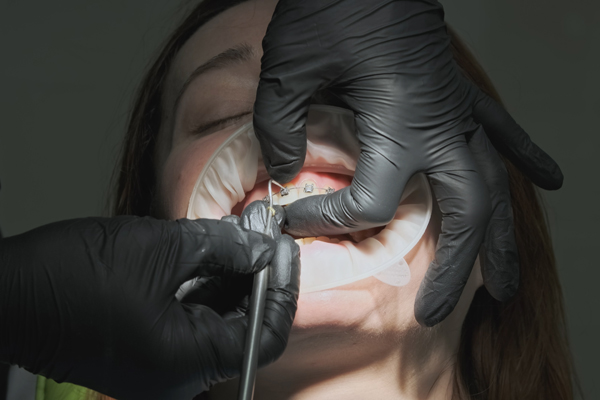
Teeth straightening is a common treatment that dentists offer to enhance one's smile and improve oral health. There are a few different options that one can consider; however, ultimately, the treatment will depend on the severity of the abnormality, the dentist's recommendation, and the goal. Continue reading to learn more about some of the most common teeth straightening options.
Invisalign® and braces for teeth straightening
Outlined below are overviews of both Invisalign® and traditional braces. This information may be helpful for those who are looking into different teeth straightening treatments.
What to know about Invisalign®
Invisalign® has become one of the most popular ways to straighten crooked, crowding, or gapped teeth. These clear aligners are provided in one single piece, whether it be for the top or bottom arch. The material is a plastic base that allows for maximum comfort and flexibility.
General dentists tend to recommend Invisalign® for minor to moderate problems, as opposed to severe ones. Because the aligner is just one single piece, the force that is applied to the actual teeth is far less than other methods, which makes the ability to shift less. Nonetheless, the force applied is still enough for standard teeth-straightening cases.
Every other month, a new aligner in the set of Invisalign® will be provided. The entire series is printed at the start of treatment based on images and scans that predict the shift.
What to know about braces
Braces, on the other hand, have been used for decades as the standard for teeth straightening. General dentists offer both traditional and clear braces to individuals who have minor to severe problems with the teeth. For example, braces can be used for minor teeth-straightening cases, as well as extreme cases that also involve bite correction or jaw re-alignment.
Braces involve the use of brackets and wires, whether they are metal-based or ceramic and plastic-based. The wires are fed through each bracket to force the teeth to shift over time. Every few weeks, the dentist will adjust the wires by tightening them as this encourages the braces to continue forcing a shift.
Other things to keep in mind
When it comes to teeth straightening, it is important to know that even if one desires Invisalign®, the condition at hand may be too severe, which could result in the need for braces. However, in some scenarios, braces can be administered to get the severe shift out of the way. Then, Invisalign® can be worn for a few months to complete the teeth straightening treatment.
Talk to a dentist today
Both Invisalign® and braces are good options for straightening teeth. However, to start the process, it is important to talk to a dentist. The dentist will evaluate the teeth, gums, and jaw to determine what type of treatment is most suitable. From there, any questions or concerns can be addressed and treatment can begin! To find out more about teeth straightening or to get scheduled, reach out today.
Request an appointment here: https://www.villadental.com or call Villa Dental at (301) 409-3583 for an appointment in our Bethesda office.
Check out what others are saying about our dental services on Yelp: Teeth Straightening in Bethesda, MD.
Related Posts
Various factors affect tooth color, including genetics, food and beverage choices, smoking, and medications. Stains can occur on the surface of the tooth or beneath the enamel. Surface stains are common, but stains can also occur due to changes within the tooth's material. Extrinsic stains are stains on the surface of the tooth, while intrinsic…
Endodontics may not be a familiar branch of dentistry to you. After all, you are probably used to going to the general dentist for your oral health needs. However, there may be times when an endodontist is the right person to perform a procedure or evaluate your condition. As you learn more about what this…
Looking for information on periodontic care? Continue reading to learn about situations when a dentist might recommend periodontics. Periodontal disease, commonly known as gum disease, is a serious oral health issue that can result in severe oral infections and tooth loss. Periodontal disease may be contained and handled with the appropriate professional treatment.Gum disease can…
Experiencing a chipped tooth often causes sudden stress, but a quick treatment like dental bonding is a seamless way to repair the enamel instantly. This simple process rebuilds the lost structure without requiring extensive drilling or alteration. To learn if this option is right for your compromised tooth, schedule a consultation at our Bethesda office.Even…